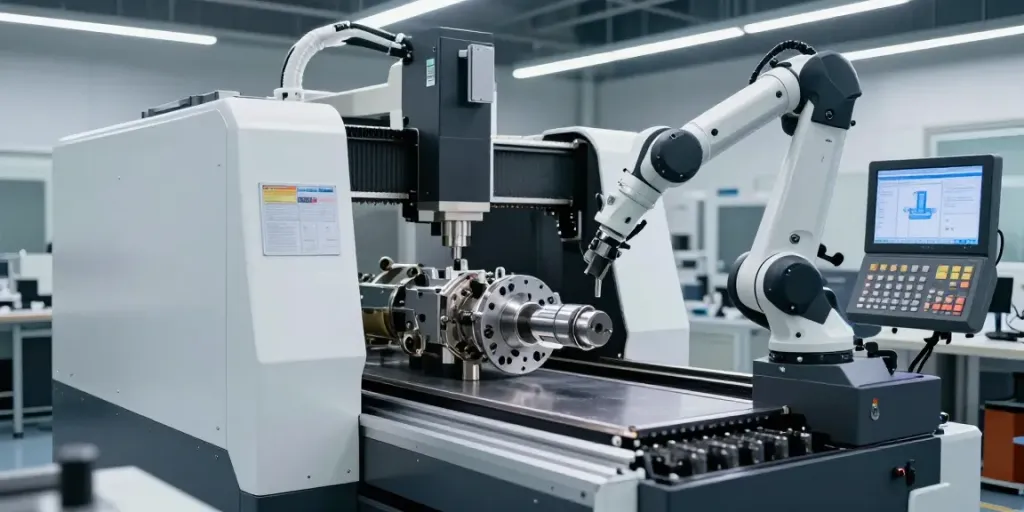
The Role of CNC Machining in Aerospace Manufacturing
CNC machining has revolutionized the aerospace manufacturing industry by enabling unprecedented precision and efficiency in the production of high-quality components. As the demand for lightweight, durable, and complex parts continues to rise, aerospace manufacturers rely on advanced CNC technologies to meet tight specifications and rigorous standards. With a focus on delivering precision parts development and on-demand production since 2003, leading aerospace cnc parts manufacturers provide innovative solutions that cater to various aerospace applications, from rapid prototyping to mass production.
Understanding CNC Technology and Its Applications
CNC (Computer Numerical Control) machining employs computer systems to control machine tools, allowing for highly precise manufacturing of components. The technology is essential in aerospace for creating parts that must withstand extreme conditions, including high temperatures and pressures. Key applications of CNC machining in the aerospace sector include:
- Production of structural components such as fuselage sections and wing parts
- Manufacturing intricate assemblies for engines and landing gear
- Fabrication of custom prototypes for testing and validation
- Creation of fixtures and tooling used in the assembly process
Innovations in Aerospace CNC Machining Technologies
The aerospace industry is experiencing rapid evolution as emerging technologies redefine how CNC machining is approached. Innovations such as:
- 5-axis machining, enabling the production of highly complex geometries
- Hybrid machining processes which combine 3D printing and CNC methods
- Advanced software algorithms for improved design-to-manufacturing workflows
- Real-time monitoring systems for predictive maintenance and process optimization
These advancements not only enhance production efficiency but also improve the overall quality and durability of the manufactured parts.
Benefits of Using CNC for Aerospace Part Manufacturing
CNC machining provides numerous advantages to aerospace manufacturers, including:
- Increased Precision: CNC systems can achieve tolerances as low as ±0.0001 inches, which is critical in aerospace components.
- Scalability: High production rates can be maintained, allowing for both rapid prototyping and large-scale production.
- Material Efficiency: CNC machining can reduce waste through precise cuts and machining methodologies.
- Flexibility: It allows manufacturers to quickly adapt to design changes and produce a variety of components on the same machine.
Key Materials Used in Aerospace CNC Parts
The choice of materials is crucial in aerospace applications as they must meet stringent performance requirements. More than 35 different metal and plastic materials are typically used in aerospace manufacturing, each selected for its properties and suitability for specific applications.
Common Metals for Aerospace Component Production
Common metals utilized in the aerospace industry include:
- Aluminum: Known for its lightweight and strength, aluminum alloys are used in airframes and equipment.
- Titanium: Provides high strength-to-weight ratios and excellent corrosion resistance, making it ideal for engine components.
- Stainless Steel: Used for its overall strength and resistance to heat, often found in parts such as bolts and fasteners.
- Inconel: A high-performance alloy that withstands extreme temperatures and environments.
Plastic Materials in Aerospace Applications
In addition to metals, various plastics are integral to aerospace manufacturing:
- Polypropylene (PP): Lightweight and versatile, used for components like interior fittings.
- Polycarbonate (PC): Known for its strength and impact resistance, ideal for transparent aircraft components.
- PEEK: A high-performance thermoplastic aggregate with excellent mechanical properties.
Material Selection for Optimal Performance in Aerospace
An effective material selection process involves understanding the application requirements, environmental conditions, and material properties. Key factors to consider include:
- Weight-to-strength ratio
- Resistance to fatigue and creep
- Corrosion and environmental resistance
- Cost-effectiveness for large-scale production
Quality Control and Precision in CNC Machining
Quality control is vital in aerospace manufacturing due to the safety and performance implications of defects. Industry leaders implement robust quality assurance techniques throughout the production process.
Implementing Quality Assurance Techniques
Common quality assurance strategies include:
- Statistical Process Control (SPC): Monitoring process parameters to ensure consistency.
- ISO 9001 Certification: Ensuring adherence to international quality management standards.
- Incoming Material Inspections: Evaluating raw materials before they enter the production cycle.
Importance of Tolerance and Specifications
In aerospace CNC machining, maintaining tight tolerances is critical for integration with other components. Tolerances should be explicitly defined in product specifications, enforcing strict adherence during manufacturing.
Technological Tools Used for Quality Checks
Modern CNC machining leverages advanced tools for quality checks, including:
- Coordinate Measuring Machines (CMM): To precisely measure physical geometrical characteristics.
- Laser Scanning: For non-contact measurement and defect detection.
- Optical Comparators: To compare the shadow of a component directly with CAD models.
Aerospace Industry Challenges and Solutions
The aerospace sector grapples with numerous challenges that demand innovative solutions. Addressing these issues is essential for maintaining competitiveness and safety in manufacturing.
Addressing Manufacturing Challenges with Advanced CNC
Challenges such as rising production costs and complex component designs can be tackled using advanced CNC machining technologies. These technologies improve efficiency, reduce waste, and minimize labor costs, making it easier to adapt to market demands.
Sustainability Practices in Aerospace Manufacturing
As environmental concerns grow, the aerospace industry is increasingly adopting sustainable practices. Strategies include:
- Utilization of recyclable materials and reduction of waste in manufacturing processes.
- Implementation of energy-efficient machining techniques.
- Investment in renewable energy sources to power production facilities.
Future Trends in Aerospace Production Technologies
Future developments in aerospace CNC machining are set to include:
- Expansion of additive manufacturing in conjunction with traditional CNC methods
- Increased use of artificial intelligence for process optimization and predictive maintenance
- Integration of IoT (Internet of Things) for real-time monitoring and control
FAQs on Leading Aerospace CNC Parts Manufacturers
What differentiates top aerospace CNC manufacturers?
Top aerospace CNC manufacturers distinguish themselves through innovation in processes, high-quality standards, and robust supply chain management. They often invest in R&D to stay ahead in technology and efficiency.
How has CNC technology evolved in aerospace?
CNC technology in aerospace has evolved from basic numerical control systems to sophisticated multi-axis machining and hybrid technologies that combine 3D printing capabilities, allowing for more complex and lighter structures.
What are the key benefits of CNC machining in aerospace?
The primary benefits of CNC machining in aerospace include higher precision, repeatability, reduced lead times, and lower production costs. This technology also supports the creation of custom components that enhance performance and safety.